Posts

The A–Z of Wine Glass Bottle Packaging

One crucial step in winemaking is the process of selecting an appropriate glass bottle. Why? Because a wine’s identity is greatly influenced by its glass bottle.

Often, the content of the bottle takes center stage in conversations and articles rather than the bottle itself. However, our attention today will be on elevating your wine packaging, specifically how wine bottles are packaged for distribution.

In the last few years, wine packaging has experienced a radical shift. The invention of cans, tetra packs, and other packaging materials and innovations have changed the way producers think about wine packaging.

However, glass bottles remain the traditional and preferred method for wine packaging. A typical wine bottle is made of glass and is available in a variety of sizes and forms. However, most wines are commonly packaged in 750 mL glass bottles.

Glass bottles have been used for hundreds of years for wine packaging and have proven to be quite beneficial. However, this has not always been so, as before this time, other materials were used for wine packaging.

The History of Wine Storage and the Transition to Glass Bottle Packaging

According to records of the time, the most prevalent means of holding and transporting wine were wineskins. Most of the evidence for the use of wineskins comes from Ancient Greece (12th-9th century BC) and from the New Testament in the Bible. According to these sources, wine was transferred straight from the fermentation into an old wineskin to be taken home. Preferred by travelers for its lightness, its popularity, and the portability it brings to wine consumption, is undeniable.

Larger quantities of wine, on the other hand, required more permanent storage with temperature control, which was critical to preserving the wine’s flavor. Thus, earthenware pottery was utilized to ferment, store, and transport wine.

These large earthenware jars were used above ground to transport large volumes of wine, but they were also partially buried underground to control temperature and preserve the product without the presence of electricity.

The Kvevri – Wine Packaging Using Clay

A Qvevri is a large, beeswax-coated earthenware vessel, used by ancient Georgians as early as 6,000 BC. They were used in every stage of wine production, from grape crushing to aging. The qvevris could hold thousands of liters of liquid, depending on their size.

They were filled with unfermented grapes from the area. The qvevri is subsequently buried, the grapes are crushed, stems and all, and primary fermentation begins. Then it is sealed with a large stone to form an airtight seal.

The qvevri is then left for up to two years, enabling the wine to experience malolactic fermentation and maturation. The result is an extremely tannic, earthenware-aged wine.

The Amphora – The Standard in Clay Vessels For Packaging Wine

Amphorae, wax-lined (pine and beeswax) pottery vessels, were made by the Egyptians and were gradually adopted by nearly all wine-drinking and wine-producing civilizations in the Mediterranean and Mesopotamia, including Ancient Greece and Rome, where they were most prevalent and widely used. They were easy to produce and, more importantly, transport. Their circular design, with tapering bottom, two handles, and a long, slender neck, fulfilled four functions:

●     The surface area of wine exposed to oxygen was reduced by the slender neck.

●     The tapered bottom promoted the accumulation of sediment and allowed the amphora to be buried with more ease when long-term storage was required.

●     They were able to load numerous into ships

●     The handles made carrying them easier

When you look at an amphora, you can find parallels between it and current wine bottles, from the long neck that protects the wine from air, to the sediment that collects on the bottom of bottles. Some societies adorned their vessels ornately, while others were strictly functional, leaving them ‘clean-skinned.’

For a long time, it was considered that amphorae were the primary means of transporting wine across considerable distances throughout the Roman Empire. Recent discoveries of shipwrecks in the Mediterranean have revealed that wine was frequently transported in a bigger container known as a dolium.

The Greeks termed these large clay jars pithoi, while the Romans called them dolium. In order to make their containers airtight and watertight, the Romans used heated resin known as “pitch” to line the dolia and plaster to patch them where needed.

The Shift To Oak Barrels For Storing and Transporting Wine

The Roman Empire conquered numerous cultures, embracing technologies such as the wooden barrel. While the Romans were aware that other cultures used palm wood barrels to transport wine, amphorae (and dolia) were the preferred mode of transport at the time.

The military and merchants swiftly replaced amphorae with wooden barrels. Wooden barrels were stronger than clay barrels, weighed significantly less, and could be rolled on their side.

Moreover, there were plenty of trees in Europe, and unlike palm trees, woods like fir and oak bent very easily, so the stave production for barrels was easier. The adoption of barrels was quick; by the third century AD, the transition to storing and transporting wine in wooden barrels was nearly complete, thereby ending clay’s 5,500-year reign.

The wood, on the other hand, did not provide an airtight seal, and the wine spoiled quickly in the wooden casks. Winemakers were not properly bunging or topping off their barrels since they didn’t understand why the wine was spoiling, and people simply proceeded to consume increasingly younger wines.

The Introduction of Glass Bottle Packaging For Wine

After centuries of dominance by the wooden cask and the resulting need to drink wines quickly before they turned to vinegar, the search began for an alternate vessel. Although the bottle had already existed, it was used primarily as a midpoint to get the wine from the barrel to the cup. Corks were not well-fitted as they were simply meant to keep bugs and dust out, not to create an airtight seal.

Henry Purefoy discovered that when the cork was not submerged in liquid, it shrank due to dryness and spoiled the wine. When the bottle was laid on its side and the cork submerged in the wine, it preserved the wine with a capability similar to that of an amphora. From a short, stout bottle in the 1740s to an elongated bottle like we have today, the shape gradually became more cylindrical to facilitate easy disposal.
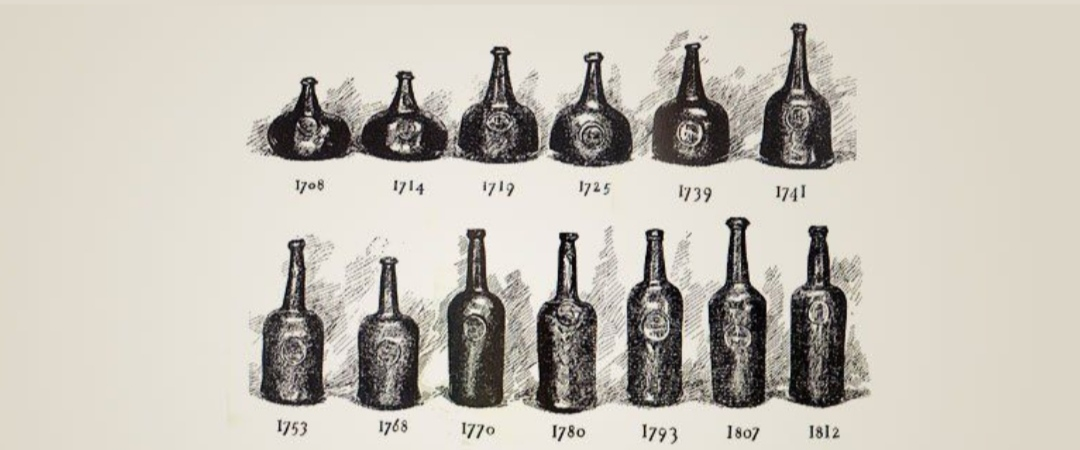
A range of glass bottle types from year 1708 to year 1812

In today’s world, bottles are recognized as the most preferred method of wine packaging. Why? because the rate of chemical interaction with glass is zero. Wine bottled in glass gets to retain its strength, aroma, flavor, and quality as a whole.

Glass bottles are not associated with any negative impact on health, which makes them a safer option. Additionally, they improve the overall drinking experience and add aesthetic appeal.

Wine Bottle Designs

Although there isn’t a set rule linked to wine bottle shapes, a few trends throughout history suggest there might be a connection between a wine bottle shape and the type and location of the grape used.

For instance, Chardonnay and Pinot Noir wines tend to come in short, classic, or fat, Burgundy-shaped bottles. Other wine producers in Portugal, Italy, Spain, and Germany tend to follow the tradition of their local areas by choosing bottle shapes most appropriate for their wines.

Additionally, the wine manufacturers want to make their product packaging as distinctive as possible, which explains why you will find one bottle that is tall and skinny, while another is short and squat. Sometimes these alterations, including to the punt, are done to allow the manufacturer to use more or less glass as needed, and to adjust bottle profile and heights to accommodate label design, shipping requirement, and budget.

For example, Chardonnays are bottled in slope-shouldered Burgundies while Cabernets are packaged in squarer-shouldered Bordeaux bottles. Generally, bottles with thick walls and a wide-pronounced punt with a sloping shoulder are associated with sparkling wines and Champagne. High-shouldered bottles with pronounced punts are used for Port, Sherry, and Bordeaux varieties. These bottles come with a bulbous neck, which serves the purpose of collecting residue.

Certain types of wines, like Burgundy and Rhône varieties, are packaged in tall bottles with sloping shoulders and a smaller punt. With the wine market being quite vast in size, it isn’t a surprise to find new wineries adopting similar bottling styles.

Preparing Glass Bottles for Wine Packaging

There are several processes involved in the bottling of wine. The first step is preparing the bottles. Wine bottles can be new or recycled. Cleaning is important regardless of the type, which is why de-labelling and cleaning can often be accomplished by soaking bottles in a washing solution.

Additionally, clear glass bottles are not recommended for wine packaging due to exposure to sunlight. Direct sunlight can discolor the content of the bottle, which is why, unless you are certain that the bottle will not come into direct contact with sunlight, it is best to go for a colored bottle for wines that are meant to be stored for longer periods of time.

Oxygen can dissolve into the wine during the bottling process, which is why one of the goals when filling is to prevent oxidation. This could affect the wine composition, shelf life, and consumer acceptance, which is why the wine bottling process is conducted to promote the dissolution of oxygen in the wines.

It is best to cork the bottle immediately after filling it and give it a final water rinse on the outside to remove any drops of wine. After filling, the wine bottles are left upright for three to five days, as this allows the pressure inside to equalize back to normal. Once these days elapse, the bottles are then stored on their sides or upside down in the coolness of a cellar.

Quality Glass Bottle Packaging For Wine

Due to the importance of bottles in the wine industry, without a doubt, glass wine bottles will not be replaced in a very long time. This is because glass represents a premium image for wine—for instance, Champagne bottles. Utilizing glass for your beer, wine, or spirits will result in a more aesthetically pleasing experience for the consumer, and increase brand awareness.

Instead of being replaced, this packaging material will evolve with time, offering wine manufacturers several more creative opportunities.

Just like the content inside, the packaging and appearance of a wine bottle play an important role in a consumer’s drinking experience, which is why Global Package comes to mind when it comes to getting some of the best glass wine bottles, designed to give your brand a distinctive look. When it comes to wine bottles, there are no set rules; you are allowed to be as creative as you choose, as long as the results suit your brand’s needs.


 

Enticing Millennials: Global Package Has Answers By Erica Harrop, CEO Global Package

In an Interesting recent article in the New York Times, entitled “The Wine Business Sees a Problem: Millennials Aren’t Drinking Enough,” author Eric Asimov cites the report “State of the US Wine Industry” by Rob McMillan, industry analyst and executive VP of Silicon Valley Bank:

“ … aging baby boomers — currently the prime market for wine — are nearing retirement age, the time of life when consumerism typically declines. Millennials, the generation that began to come of age after the turn of the century, have given no indication that they are poised to step in. They buy much less wine than boomers, and the wine industry has not done enough to entice them to become regular consumers.”

While it’s a concern that has troubled the industry for decades, few wineries (or suppliers) appear to be addressing the problem. As McMillan puts it,

” In prior reports, we noted that the falling interest in wine among younger consumers, coupled with the encroaching retirement and decreasing wine consumption of baby boomers, poses a primary threat to the business …that issue has yet to be addressed or solved, and the negative consequences are increasingly evident.”

So how do we tackle this? Let’s start with who these buyers are and what motivates them to purchase wine? Here’s McMillan again:

“Millennials grew up in a world that has been far more encouraging of connoisseurship than when boomers were young. Social media has given everybody the opportunity to exercise their critical voices, for better or worse. Millennials are a more discerning generation, at a younger age, than baby boomers were … (however) they have less disposal income.”

In addition, McMillian makes the point that this demographic is a much more diverse population: ““While only 28 percent of the boomer population is nonwhite, 45 percent of the millennial population — and almost half of Gen Z — is nonwhite.” It remains sad fact that today, even after recent movements toward racial justice, minority-owned wineries are still few and far between.

Finally, in McMillan’s report he points out that “millennial consumers are more concerned with social justice and with health and environmental issues, including climate change …A brand’s social values are increasingly connected to a consumer’s decision to purchase particular products, including wine,”

All of these trends have led Global Package to establish strong international partnerships with the wine and spirits industry’s most progressive and innovative companies. We have been at the forefront of working with leading European glass manufacturers to develop revolutionary and sustainable new designs.

A good example is our long-time partner, Estal, and its Sommelier Mouth (SM) bottles. This line includes the Essentia Burgundy, the Bordeaux, and the unique flute Espiga bottles, all of which are available in Flint and Antique and in both short and long tops. These bottles are revolutionary in their design, which includes the anti-drip barrier and groove guides to facilitate a clean, straight cut of the capsule. Production of the Sommelier bottles also has a reduced carbon footprint.

Also on the ecological front, which attracts Millennials concerned with climate change, we introduced a couple of years ago Estal’s gorgeous and environmentally-friendly Wild Glass™ line of bottles to an enthusiastic US market. These bottles are 100% sustainable “real cycled” glass bottles that are one-of-a-kind, since slight imperfections in the natural formation of the glass are allowed to remain, while retaining all the manufacturing positives of automated glass, much like organic handmade art. Estal’s process also doesn’t discard bottles with cosmetic defects, which reduces the discard rate from 25% to 15%.

Finally, Global Package offers the full complement of Elegant Light™ bottles, in classical shapes and colors. Importantly, they are lighter weight, resulting in more economical and ecological shipping.

We invite you to contact us. Our entire sales staff, on both East and West coasts, are available to answer your questions and advise on the best glass solution for your winery to meet the Millennial challenge.

Global Package, located in the Napa Valley, is experienced in supplying high-end wine and spirits glass bottles to North American markets. With a comprehensive off-the-shelf portfolio, and the opportunity for customization and decoration, Global Package can assist your brand with the most appropriate solution whatever your budget or expectations. From glass bottles, bottle decorations, pewter labels, to bar top closures and corks, Global Package can assist with your project. Start your packaging journey today by calling +1 707 224-567 or emailing info@globalpackage.net.


Global Package Exhibits New Bottle Collections at WIN Expo 2021

Napa, CA October 27, 2021 — Global Package LLC Is thrilled to showcase new bottle collections in Booth #230 at the upcoming Wine Industry Expo. The Tradeshow and Conference will be held at the Sonoma County Fairgrounds in Santa Rosa on Thursday, December 2nd from 9am to 4pm.

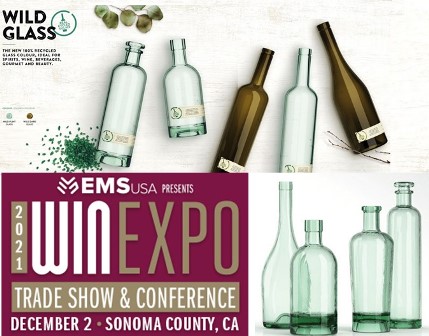
The WIN Expo was paused last year due to COViD-19 precautions. According to Global Package President and CEO, Erica Harrop: “We are thrilled the Expo is back so we can show off our new award-winning bottle designs,” she enthuses. “It’s great to get back in touch with our colleagues at WIN and our friends and customers in the industry. The passage of time has not slowed the creative juices of our glass supply partners, so come and visit us to see what’s new! We will be showing off the new PRIMA and RUDE bottles in the distinctive Wild Glass™ collection.”

Estal’s acclaimed 100% ‘real cycle’ Wild Glass™ and the Sommelier Mouth collections both include new Flint glass options. Wild Glass™ features a beautiful organic and unique hand-made look with an ecologically sustainable production process, utilizing only post-consumer recycled glass. It’s a process that’s both efficient and sustainable, reducing CO2 output because it takes less energy to melt glass than converting raw material into glass.

In addition, Global Package will be displaying the full line of Estal’s Sommelier Mouth (SM) bottles, which feature an anti-drip barrier and groove guides to facilitate a clean, straight cut of the capsule. The line includes the Essentia Burgundy, Bordeaux, and fluted Espiga bottles. All are available in Flint, Wild Glass, and Antique options.

“You have to see these unique bottles in person,” says Erica Harrop, President and CEO. “Our gorgeous new shapes in Wild Glass retain the slight imperfections in the natural formation of the glass, while retaining all the manufacturing positives of automated glass. And our Sommelier Mouth bottles highlight a slightly wider neck and more fluid figure, resulting in maximum strength and adding to the perception of a sleek higher-end bottle. Neither of these bottle collections requires any changes on the bottling line.”

Also on display at the Global Package booth will be samples of the company’s wide range of both stock and custom bottles, in a variety of styles, shapes, and colors. Visitors are encouraged to stop by Booth #230.

Global Package, located in the Napa Valley, is experienced in supplying high-end wine and spirits glass bottles to North American markets. With a comprehensive off-the-shelf portfolio, and the opportunity for customization and decoration, Global Package can assist your brand with the most appropriate solution whatever your budget or expectations. From glass bottles, bottle decorations, pewter labels, to bar top closures and corks, Global Package can assist with your project. Start your packaging journey today by calling +1 707 224-567 or emailing info@globalpackage.net.


Excited to be a part of the 2021 North Coast Wine Industry Expo

We are excited to be a part of the 2021 North Coast Wine Industry Expo being held on December 5th at the Sonoma County Fairgrounds and invite you to visit us at booth # 230 along with 300 of the best suppliers in the industry. We would like to offer you use of our event promo code GLO230 – Use this code at wineindustryexpo.com/registration (https://wineindustryexpo.com/registration) to gain free access to the trade show.

Global Package, located in the Napa Valley, is experienced in supplying high-end wine and spirits glass bottles to North American markets. With a comprehensive off-the-shelf portfolio, and the opportunity for customization and decoration, Global Package can assist your brand with the most appropriate solution whatever your budget or expectations. From glass bottles, bottle decorations, pewter labels, to bar top closures and corks, Global Package can assist with your project. Start your packaging journey today by calling +1 707 224-567 or emailing info@globalpackage.net.

Global Package Adds to Its Beautiful Wild Glass™ Collection

Global Package LLC President and CEO, Erica Harrop, has announced new additions to its beautiful, near 100% recycled Wild Glass™ collection for wines and spirits. The new Wild Glass Dark™ collection—produced by one of Europe’s premier glass companies; Spain’s Estal—is being introduced this month and will be sold in the U.S. exclusively by Global Package.

“We are thrilled to add these new bottles to this extraordinary collection,” says Harrop. “Not only is the manufacturing process for these bottles shorter and more sustainable, it creates bottles each of which is unique and aesthetically beautiful in shape, color, and texture.”

Estal’s Wild Glass™ collection boasts a more sustainable and shorter manufacturing process by embracing “flaws” in the glass, which also tells the story of historical craftsmanship and a legacy of experimentation. “Wild” colors are unique color hues with natural variations to enhance distinctiveness. New designs being introduced this month include the Wild Glass Prima Expressione™ collection of Spumanti, Rhine, Burgundy, Bordelaise wine bottles.
Also new to the collection are the Wild Glass Rude™ spirits bottles, consisting of Lance, Farm, Pilot, Barrel, 1919, and Melee designs. This collection also allows customers efficient ways to expand and customize their bottles, from size and shape to choker diameter.

“I was intrigued by the word “Rude” in the collection name,” Harrop admits. “But I learned that it is drawn from a language being developed in today’s culture, based on asymmetry and imperfections in nature—such as knots in wood, wefts and wrinkles in textiles, veins in stone—and defects in fashion like the torn jeans so fashionable today. It’s fun to watch the Wild Glass™ collection morph into such creative new products!”
Global Package has been an acclaimed industry leader as it consistently introduces new designs into its extensive catalog of offerings, from its Elegant Light™ collection of lighter weight bottles to its opulent DobleAlto™ collection, as well as a full range of in-stock standard bottles.

Global Package, located in the Napa Valley, is experienced in supplying high-end wine and spirits glass bottles to North American markets. With a comprehensive off-the-shelf portfolio, and the opportunity for customization and decoration, Global Package can assist your brand with the most appropriate solution whatever your budget or expectations. From glass bottles, bottle decorations, pewter labels, to bar top closures and corks, Global Package can assist with your project. Start your packaging journey today by calling +1 707 224-567 or emailing info@globalpackage.net.

Global Package’s Elegant Light™ Bottles Get High Marks for Design, Sustainability, and Affordability

A couple of months ago Global Package reported the end of last year’s US International Trade Commission’s (USITC)  antidumping duty, which returned favorable pricing for Global Package’s Elegant Light™ line of bottles. Now, with new shipping challenges facing imported European glass, these bottles have become even more in demand.

“With fully stocked warehouses we are perfectly positioned to meet these challenging times,” says Erica Harrop, Founder and CEO of Global Package LLC. “Since 2008, our strong alliances with glass factories in China have enabled us not only to help design the European-style Elegant Light™ line, but also to work toward lighter weights that would reduce shipping costs, as well as to achieve a more sustainable line of bottles at affordable pricing. Today, we have achieved all three goals.”

According to Harrop, the Elegant Light™ bottles are always in stock and include nine shapes that are distinctive for their larger, straight-line necks and voluptuous curves. Included in the line is the recently introduced Bordelais Fiona Carrée bottle, which has the look of a heavier reserve bottle and features an elegantly tapered body, deep punt, and larger neck for bottling-line ease and speed. Other Elegant Light™ bottles include European-style, lighter weight 750ml and 1.5L Bordelaise and Burgundy bottles.

Harrop regularly inspects China factories to ensure they meet strict US-required quality standards, including ISO quality measures—from selection of raw materials through all production processes, including automated production lines and the design of molds—to warehousing of the finished product and shipping procedures. She also works directly with product development teams at the factories to ensure customized products meet customers’ and US quality conformance requirements.

“After decades of working with these suppliers, I have built a strong personal trust between us,” adds Harrop.  “In addition, through my decades of working with domestic and European glass factories, I have developed great respect for the issues and limitations of manufacturing. This enables me to communicate effectively within this environment.”

Global Package’s alliances with both European and Chinese factories also focus on production efficiencies, which allows the company to control costs and pass on savings to customers.

A Huge Shout Out to Wineries!

Napa, CA  May 27, 2020 — Erica Harrop, President and CEO of Global Package LLC, applauds all those wineries that are out there making decisions and moving forward in these challenging times. Their efforts will help the economy recover more quickly as businesses gradually reopen and regain their footing as the lifeblood of a healthy America.

All of us at Global Package support you and here to help in any way we can. All of us truly are interconnected and in this together!